Feeble efforts
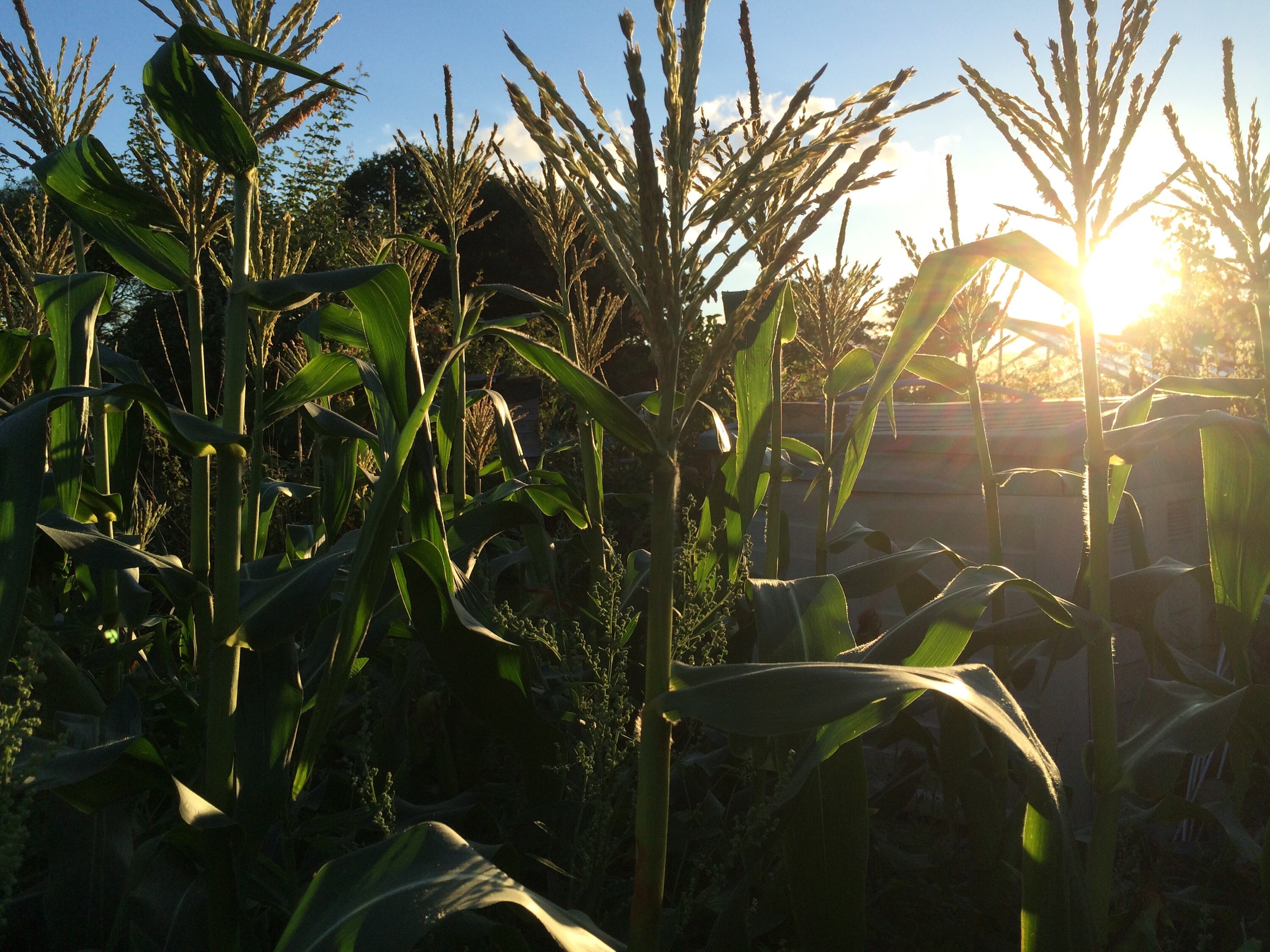 Done next to nothing at the plot. But still got fabulous corn. Just shows: two hours a week (or less) can work miracles.
Posted on 24th August 2015
Under: Uncategorized | 1 Comment »
Done next to nothing at the plot. But still got fabulous corn. Just shows: two hours a week (or less) can work miracles.
Posted on 24th August 2015
Under: Uncategorized | 1 Comment »
 Well this is it. A long, long time since I updated this blog. Even longer since I had the time to do any proper vegetable gardening.
In the circs (the utter lack of time for, like, anything) I’m reasonably pleased. I mean, I’m getting crops and the plot isn’t ALL weeds – just mostly weeds.
I’m working longer hours these days than in the past, and the commuting takes up what little is left, so I’ve had to cut back on what I can grow. Nothing difficult makes the cut any more (bye bye cauliflowers). It’s the basics, plus whatever I can make the time for if I really, really try.
Having said that, it turns out you can grow a fair bit on only two hours a week. You do have to put up with a lot of imperfection (which means weeds), but you can get carrots, beetroot, French beans, potatoes, onions and asparagus without too much difficulty. The asparagus has been, as ever, a joy: you do pretty much bugger-all, and get a delicious and rather valuable crop.
So the new direction of this blog is to document the results of vegetable gardening on no more (and often much less) than 2 hrs a week. I’ll be letting you know.
Posted on 31st May 2015
Under: Uncategorized | 6 Comments »
Hello. I’m half back in gardening mode.
I say half. More like one tenth. I’m getting to the plot very irregularly and my gardening has become pretty shit and dilatory. Work is just eating too much of my time.
BUT I’m gardening again. Pix coming shortly to prove it.
Posted on 10th April 2015
Under: Uncategorized | 8 Comments »
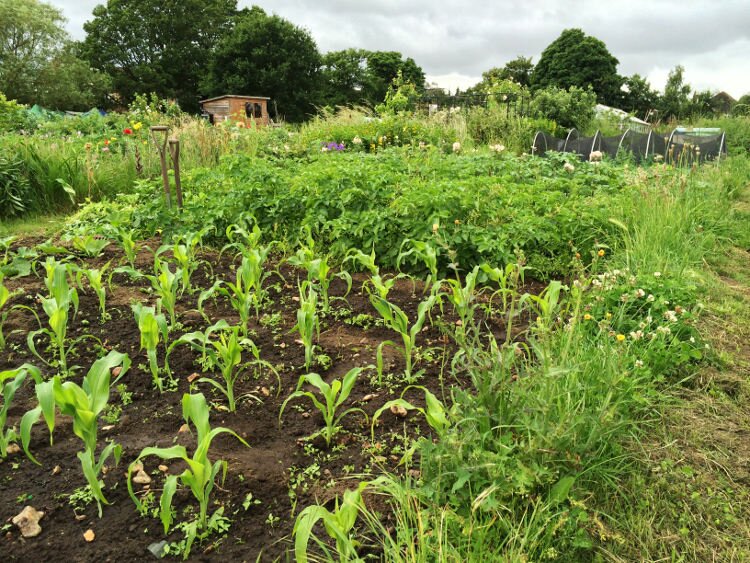 You will have noticed that I’m doing no posting this year. This is because I am largely doing no gardening.
My vegetable patch, consequently, is a disaster zone. This is the only view I could find where my plot doesn’t look utterly overrun with weeds. Everything else is.
I’ll just about get a potato crop, and possibly some corn – if I look after it (vain hope). I may even get beetroot (which is close to indestructible). Everything else is pretty much fucked.
Oddly, I can’t even summon up the energy to care. Much.
Reason: My energies are so eaten up caring and worrying about my new job that there’s just nothing left for, well, anything else. I’m exhausted and distracted. Frankly, if I get anything to eat from this year’s gardening, I’ll just be catatonically grateful.
Posted on 15th June 2014
Under: Sweetcorn | 4 Comments »
I have a day off. The plot needs weeding. But guess what?
It’s pouring with rain.
So I can’t do a damn thing unless I want to catch pneumonia. And the weeds will merrily grow and grow in the wet.
Fucking brilliant.
Posted on 10th May 2014
Under: Uncategorized | 5 Comments »
I left my job yesterday. I’d been with the company for 16 years.
That’s longer than I spent in all my schooling. Longer than I’ve been married. It’s the longest time I’ve ever spent doing the same thing (well, a series of things really…. but you take my point). I knew 350 people at the company by name, and many, many more to say ‘hi’ to.
Intellectually, in an abstract and nonchalant sort of way, I vaguely speculated that my last day wouldn’t be just like any other. It would probably be, you know, a bit sad. I issued the customary gags about being finally parolled etc etc with little thought.
So I hadn’t prepared myself for the cold wrecking ball of reality that hurtled into me when I got home last night. I was suddenly bereft and lost. A part of my life that was bigger than I’d ever realised was history – and time’s implacable usher had hustled me into a new era. At the door, my wife greeted a man smaller and quieter than the one she’s known these last 14 years.
It will pass, of course. Next week I start a new job, where I’ll have all the miseries of being the newbie to blot out the sorrow of today.
But until then, I feel totally defined by my ‘ex-‘ status.
Posted on 23rd April 2014
Under: Uncategorized | 5 Comments »
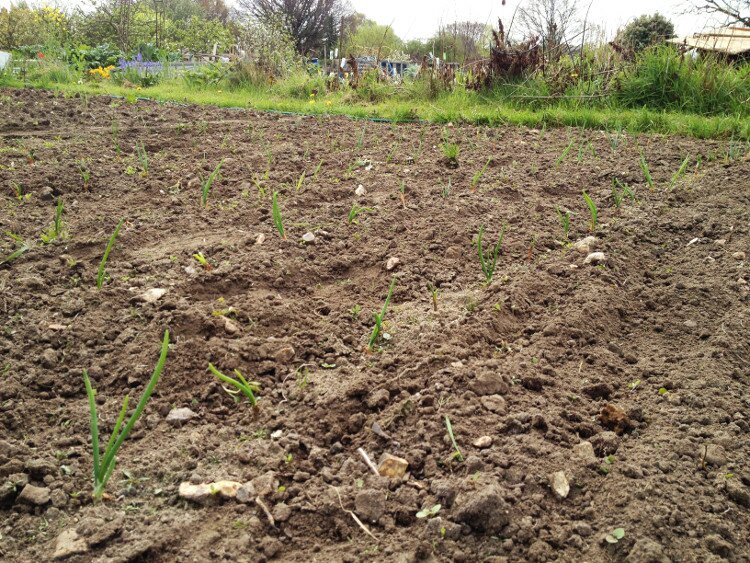 Well, I’m back on the job. Got the onion sets in a few weeks ago, and they’re now starting to put on some growth.
After years of spending a fortune on my allotment, in the sure and certain knowledge that my veg was costing far more to grow than to buy (and whingeing about it – see here), I’m now beginning to think it may start to pay.
Why? For the same reason that refining oil from tar sands, expensively, is now attractive: the cost of food in the shops (and oil from Saudi Arabia) has soared. Growing your own suddenly looks much better value.
Given that food price increases are likely to continue (and not just in the USA), I reckon an allotment may soon be a money-saver.
Posted on 12th April 2014
Under: Alliums | 1 Comment »
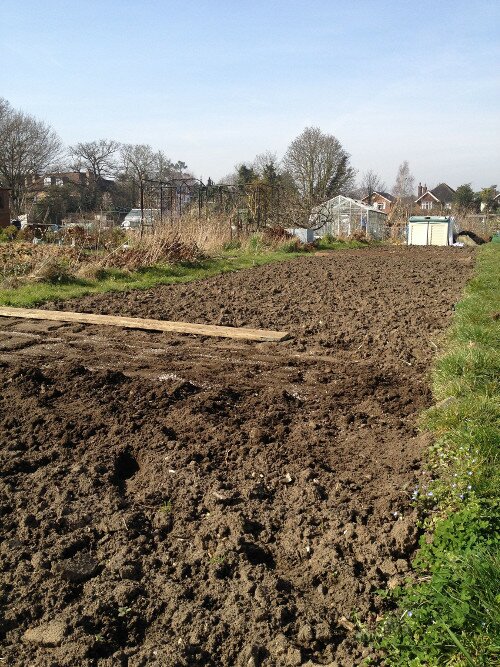 Stunning, outrageous weather. Never seen anything like it in March… quite remarkable.
Have got in my early potatoes and onion sets. Spuds and onions are probably my two most valuable crops; we’re almost self-sufficient in both, year round.
It all looks wonderful, and yet I’m afraid this is not down to the efforts of yours truly. Yes, dear reader, I fear I have a shameful confession: I paid a guy to dig my plot.
I’ve done this before, and I’m not proud. It’s a disgustingly bourgeois thing to do.
But hey, it makes the difference between having a plot and not having one. I simply don’t have the time, any more, for the winter digging. So there it is.
Who am I kidding? I don’t give the tiniest shit. You do what you gotta do.
Posted on 16th March 2014
Under: Uncategorized | 9 Comments »
Apologies for the lack of anything related to, you know, gardening. At this time of year, there’s not much to relate.
So I’ll rant, instead, about this recent UK court case. If you’ve not heard of it, do take two mins to read the linked article. It’s one of those rank, reflux-inducing stories that make you ashamed to live in these islands.
In no rational, decent society would Mr Woodhouse have faced criminal charges for his actions. I cannot imagine any US state, for instance, deciding to prosecute in these circumstances. In America, it’s likely Mr Woodhouse would have shot, maybe killed, the robbers. And even (especially?) then, no federal prosecutor would dare to press charges.
Yet in Britain, our ridiculous CPS persists in bringing these bloody offensive charges against people who are simply trying to protect their property and the lives of their families.
I have never cared about the pettyfogging legalistic arguments about whether force used against thieves and muggers is ‘proportional’. They are beyond preposterous. Anybody who’s ever been persistently bullied and victimised, or physically assaulted, knows that in such circumstances nobody – not even Socrates himself – carefully weighs the pros and cons, the ‘nice’ rights and wrongs, and emerges from an hour’s internal argument to take a deliberate, careful, ‘safe’ action.
In the heat of the moment, you act on instinct – fight or flight. Your brain is utterly addled with adrenaline and fear/rage. Rational thought isn’t possible. If you perceive that your loved ones are at risk, the adrenaline-addlement is roughly trebled.
It is unreasonable and unrealistic to hold human beings to the standards that British law demands. There is only one rational way to legislate for such circumstances, and it’s a very clear and simple axiom:
If you trespass on other people’s property, with the intention to steal from them or harm them, you abandon your right to life and safety.
In other words: You started it, you take the fucking consequences. No right of appeal.
Posted on 25th January 2014
Under: Rants | 3 Comments »
A quick glance at my analytics is revealing. Over the last three weeks, visitors to soilman.net coming from Google were most likely to have searched for:
…. and, inevitably, “fucking in the rain” (sorry guys: not one I’ll be catering to).
Clearly, then, the current meteorological situation weighs heavy on the collective UK mind.
I hear ya. I really do.
Posted on 9th January 2014
Under: Rain | 1 Comment »